Rathin K. Joshi

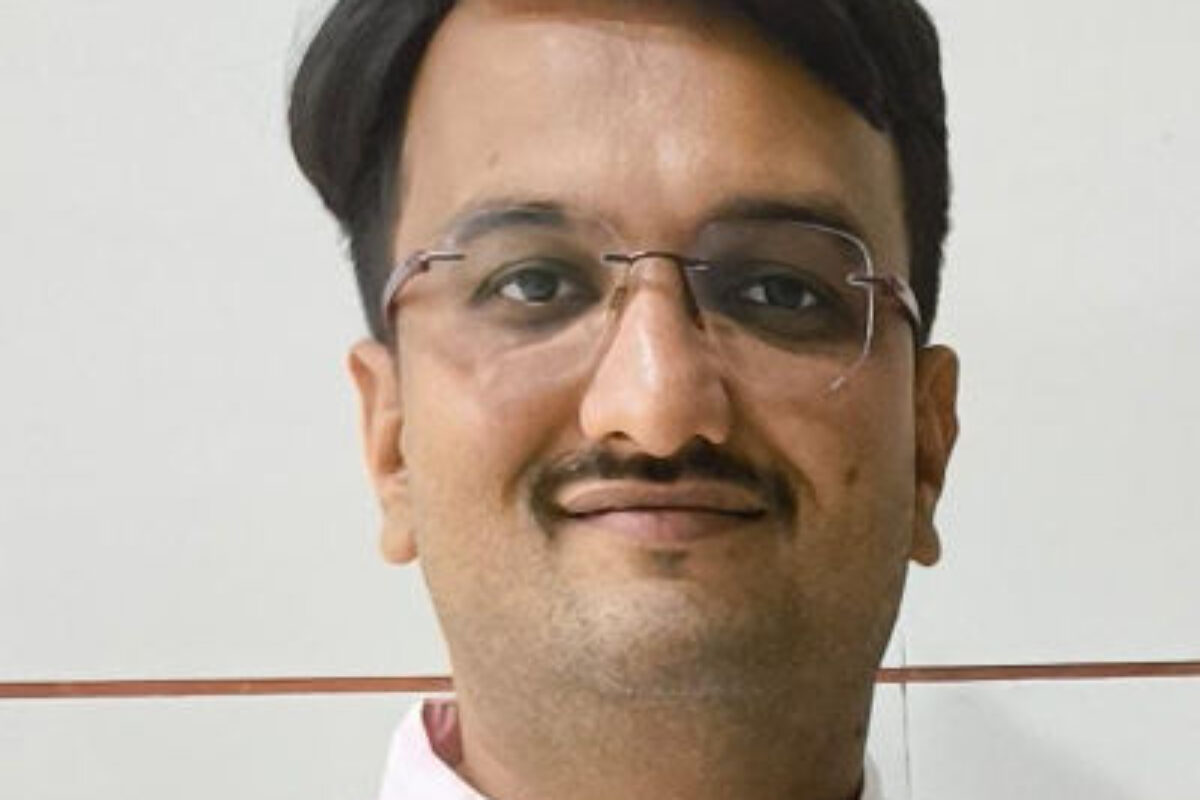
Rathin K. Joshi earned his PhD from the BEES Lab in the Electronic Systems Engineering department at the Indian Institute of Science (IISc), Bangalore. He holds a postgraduate degree in Information and Communication Technology from DA-IICT, Gandhinagar, and a bachelor’s degree in Electronics and Communications from GEC, Bhavnagar. Additionally, he has three years of pre-doctoral experience in modular logic development for the automotive industry. 

He is a research-driven biomedical engineer with an interest in neural signal processing, brain-computer interfaces, and wearable neurotechnology. His research work bridges engineering and neuroscience, developing innovative tools for real-time EEG/ERP acquisition, signal analysis, and clinical translation. His research work has been recognized by several journals, conferences, patents, and hackathon competitions at regular intervals. With a strong foundation in neural signal processing and brain computer interfaces, he aims to contribute to impactful healthcare solutions through interdisciplinary collaboration, mentorship, and ethical research practices. 

More information: https://rathin63.github.io/website/  

Mahsa Khoshkhou

Mahsa Khoshkhou is a Postdoctoral researcher in the Biomedical Engineering Department at The Johns Hopkins University. She is analyzing intracranial EEG data to unravel how cognitive efforts suppress epilepsy seizures. Her research is advised by Professor Sridevi Sarma and Dr. Joon Yi-Kang, MD. She earned her BSc, MSc, and PhD in Physics from Shiraz University. She has been developing computational models of biologically inspired spiking neural networks for several years and served as a Postdoctoral researcher in computational neuroscience at Washington University School of Medicine and the Mind/Brain Institute at The Johns Hopkins University. Her research interests include neural synchronization, biological frameworks of reinforcement learning, and associative memory formation.

Luis Sanchez

Dr. Sanchez develops and validates AI-enabled diagnostic and clinical decision-support technologies for neurological disorders and brain health. An enterprise technology executive and former DARPA principal investigator, he combines decades of leadership in cybersecurity and infrastructure with translational healthcare AI.

Dr. Sanchez studies how the brain organizes and distributes energy, and how that organization reflects neural health. His work introduces the Neural Health Index (NHI), a physiologically grounded marker derived from the spatial distribution of resting-brain energy that can be computed from EEG, MEG, or fMRI. Validated across more than 800 participants spanning neurological, psychiatric, neurodevelopmental, and neurodegenerative disorders, NHI distinguishes healthy from clinical populations with high sensitivity and specificity, scales with disease severity, and generalizes to unseen diagnoses, pointing toward a disease-agnostic, modality-invariant biomarker for disease stratification and treatment monitoring. He also mentors graduate researchers in biomedical AI.

Before returning to academic research, Dr. Sanchez spent more than three decades as a technology executive and engineer, including serving as founder and chief information and technology officer of a multinational technology and security services firm and as a principal investigator leading more than $6.5 million in DARPA-funded network defense research. He is an inventor on four issued U.S. patents, an author of three IETF Internet Standards, and a Senior Member of the IEEE and the National Academy of Inventors. He earned a PhD in Biomedical Engineering with support from an NDSEG Fellowship. He holds Master’s degrees in Bioinformatics and Electrical Engineering and a Bachelor’s degree in Electrical Engineering.